
Understanding Health Tests
Bone density or body composition? Clarify your DXA appointment
DXA can support different assessments. Confirm whether your appointment concerns bone density, body composition or another specific clinical question.

Make room for an informed decision.
DXA can support different assessments. Confirm whether your appointment concerns bone density, body composition or another specific clinical question.
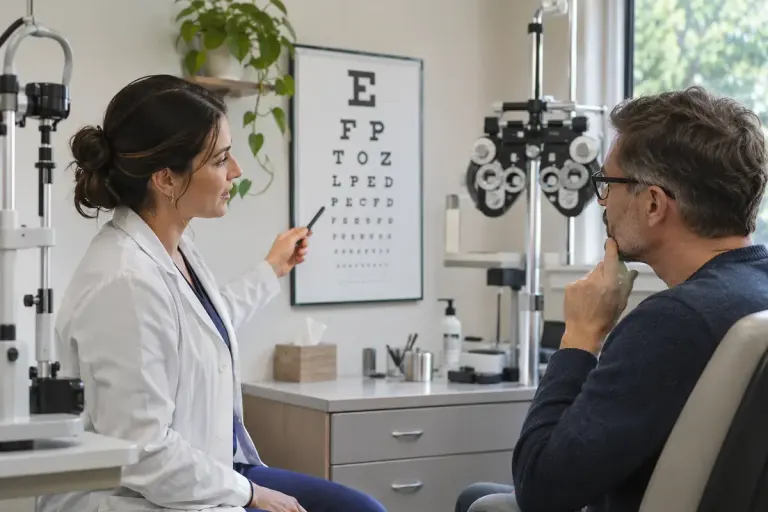
A result such as 20/40 describes distance visual acuity, not a percentage of total vision. Read the test conditions and correction alongside the fraction.

An eGFR result estimates kidney filtration. Read it with previous results, urine testing, and clinical context rather than treating one number as a diagnosis.

Ferritin helps assess stored iron, but a result needs clinical context. Prepare useful questions before deciding that an iron supplement is the answer.
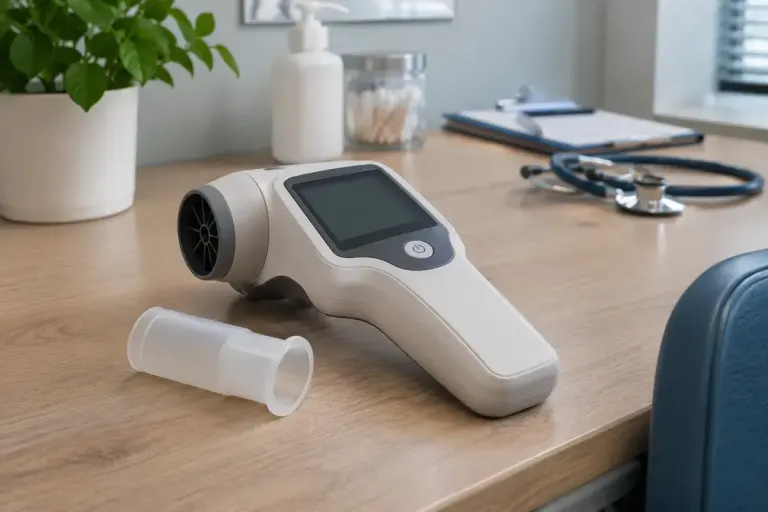
FEV1, FVC and their ratio describe different parts of spirometry. Understand the labels so you can ask useful questions when a clinician explains the report.
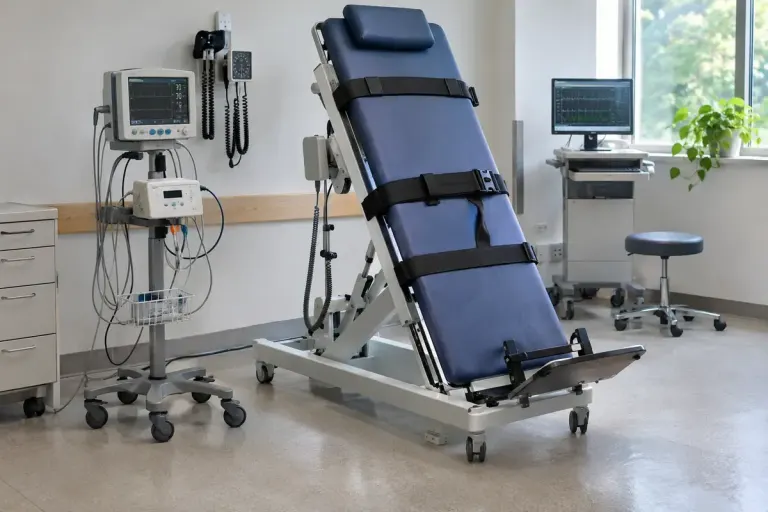
Learn what clinicians observe during a tilt-table test, which preparation details to confirm, and why a result needs your wider fainting history.

Understand the comparison groups behind bone-density T-scores and Z-scores, and prepare useful questions for the clinician reviewing your report.

Prepare for a spirometry appointment using your clinic’s instructions, especially about inhalers, recent illness and the question the test is intended to answer.

A flagged laboratory result is a reason to ask for interpretation. Check the report’s range, units and clinical context before comparing numbers online.