Understanding Health Tests
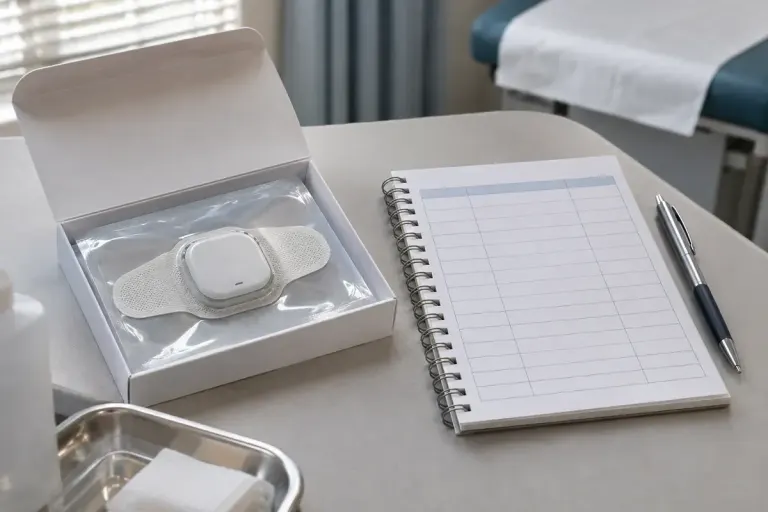
An ECG patch records the hours between appointments
Understand what an ambulatory ECG patch records, why symptom notes matter, and which questions to ask the clinic before wearing one.

Make room for an informed decision.
Understand what an ambulatory ECG patch records, why symptom notes matter, and which questions to ask the clinic before wearing one.

The ankle-brachial index compares ankle and arm blood pressures. Learn why a clinician may request it and which questions help you understand the result.
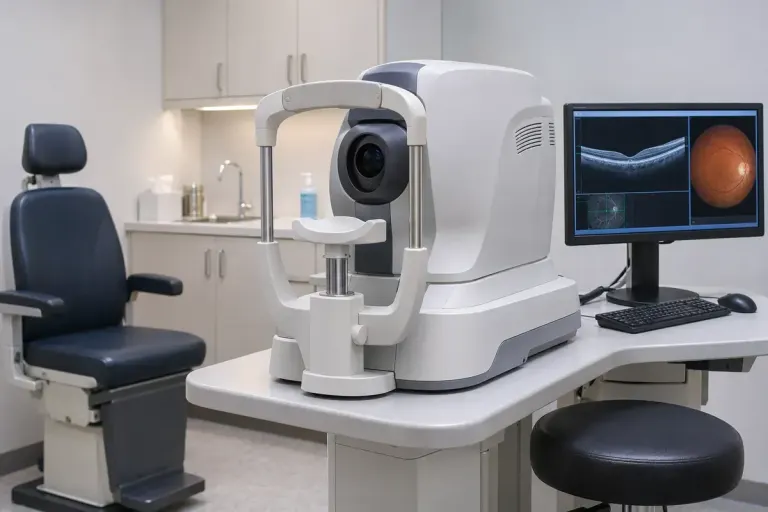
OCT creates cross-sectional images of eye tissue rather than an ordinary surface photograph. Learn what to ask about the scan, results and appointment preparation.
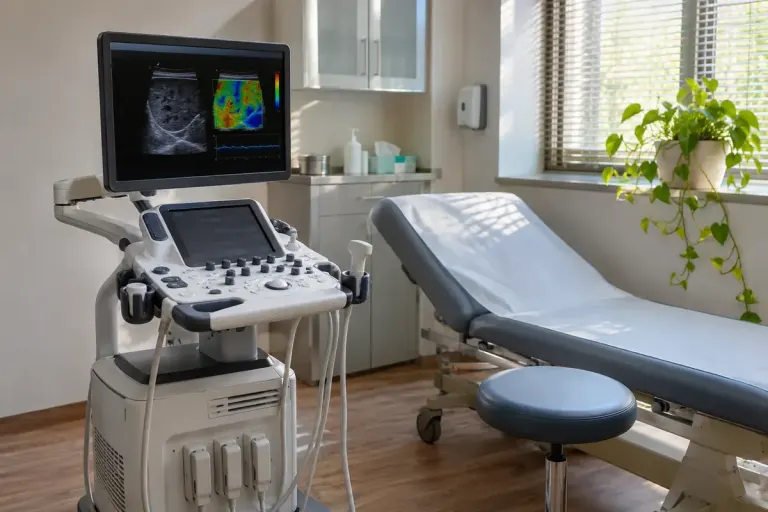
A liver stiffness scan gives your clinician one part of the picture. Prepare for transient elastography and ask how the result will be interpreted.
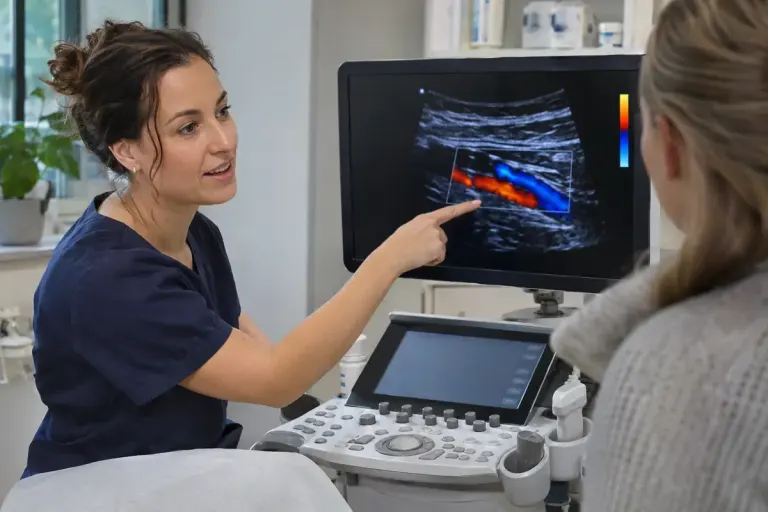
Red and blue on a Doppler ultrasound are display choices for flow information. Learn why the image needs its colour scale, settings and clinical report.

A D-dimer test helps clinicians assess possible clotting problems, but a positive result has several explanations and must be read with symptoms and other evidence.

Albumin is a blood protein, but its test result is not a stand-alone nutrition score. Learn which context and follow-up questions help explain it.

Lying and standing blood-pressure readings help clinicians assess symptoms after a change of posture. Understand the appointment and the information worth bringing.

A Wood’s lamp adds ultraviolet illumination to a skin examination. Learn what it can reveal, how to prepare, and why results need clinical context.