
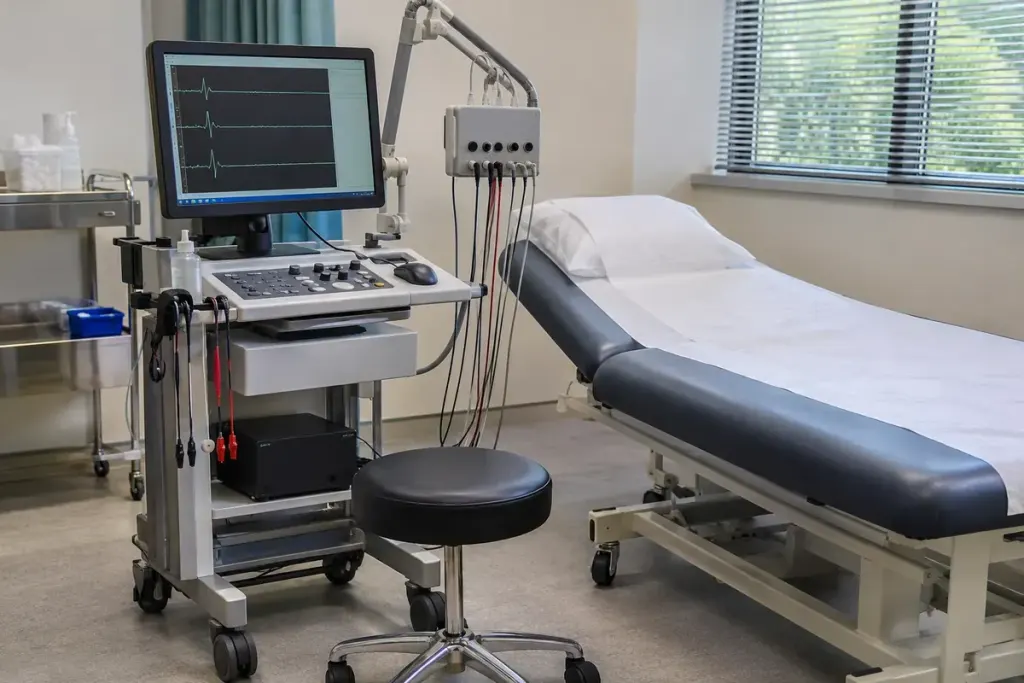
An appointment letter may place nerve-conduction studies and electromyography on the same line. They can be used together, but they examine different electrical information.
Imperial College Healthcare’s patient leaflet explains that nerve-conduction studies use surface pads to examine nerve function, while needle EMG records electrical activity from muscles. Which parts are needed depends on the clinical question.
Before the visit
Read the instructions from the department performing your test. Ask which parts of the body need to be accessible and whether you should avoid creams or lotions on the day. Bring an accurate medicine list and tell the department about implanted cardiac devices or blood-thinning treatment before the appointment.
Do not stop medicines on your own. Different services may need to review your circumstances and give individual instructions. If the letter is unclear, contact the department rather than combining preparation advice from several unrelated clinics.
During the explanation
Ask what you are likely to feel and how to signal if you need a pause. You can request an explanation before each stage. A description of discomfort is personal; knowing the procedure’s name does not tell the team how it feels for you.
It may help to bring a short symptom timeline: where the problem occurs, when it started and what has changed. Keep it descriptive instead of trying to name the diagnosis the test must find.
Before leaving
Confirm who receives the report, who explains it and when you should follow up if no appointment or message arrives. The recording is one part of an assessment and needs to be interpreted with your history and examination.
If the test plan changes on the day, ask what was completed and why. A clear account of the visit is more useful than assuming that every appointment labelled EMG contains exactly the same set of recordings.