
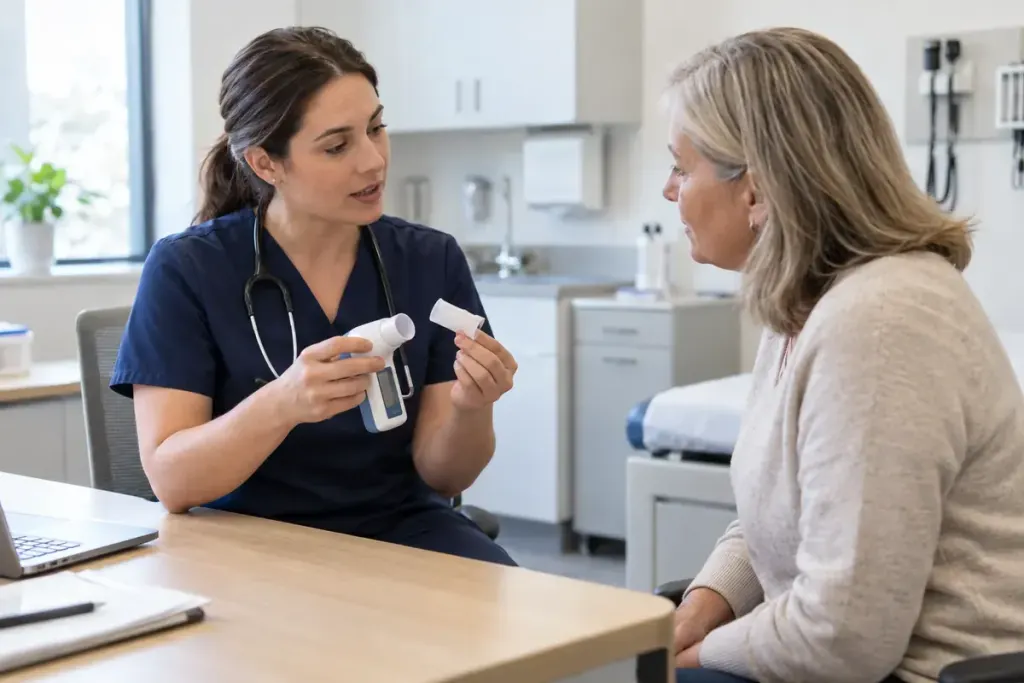
A spirometry appointment can sound like a simple instruction to blow into a tube. The useful preparation starts earlier: understanding the clinic’s instructions and telling the team about circumstances that may affect whether or how the test should be performed.
The NHS explanation of spirometry describes a test used to assess lung function, including how much air a person can breathe out. A healthcare professional supervises the test and checks that the person is well enough to proceed. It is not a home challenge to perform as forcefully as possible without guidance.
Keep the instructions attached to the appointment
Read the clinic’s preparation information when it arrives. If anything is unclear, contact the team before the day rather than following a general internet timetable. Advice about food, smoking, clothing or medication should match the planned assessment.
Do not stop an inhaler or another prescribed medicine on your own. The NHS notes that patients are told if they need to change medicine or inhaler use before testing. Ask the clinic to clarify the exact instruction if your appointment letter and an earlier conversation seem different.
Tell the team about a recent chest infection, surgery or other relevant change in health. Let the professionals decide whether the appointment needs adjustment. Bring the requested information and an accurate medicine list through the clinic’s usual confidential process.
Leave knowing what happens to the result
Ask what the test is intended to investigate or monitor and who will explain its findings. A result needs interpretation alongside the clinical situation; an unfamiliar number is not a diagnosis by itself.
A short question list might include: “Who receives the report?”, “When should I expect an explanation?” and “What should I do if I have not heard by then?” Write down the answer while it is clear.
If you feel unwell during the supervised test, tell the professional immediately. Following their instructions and communicating honestly are more useful than trying to produce a result that you imagine will look better.