
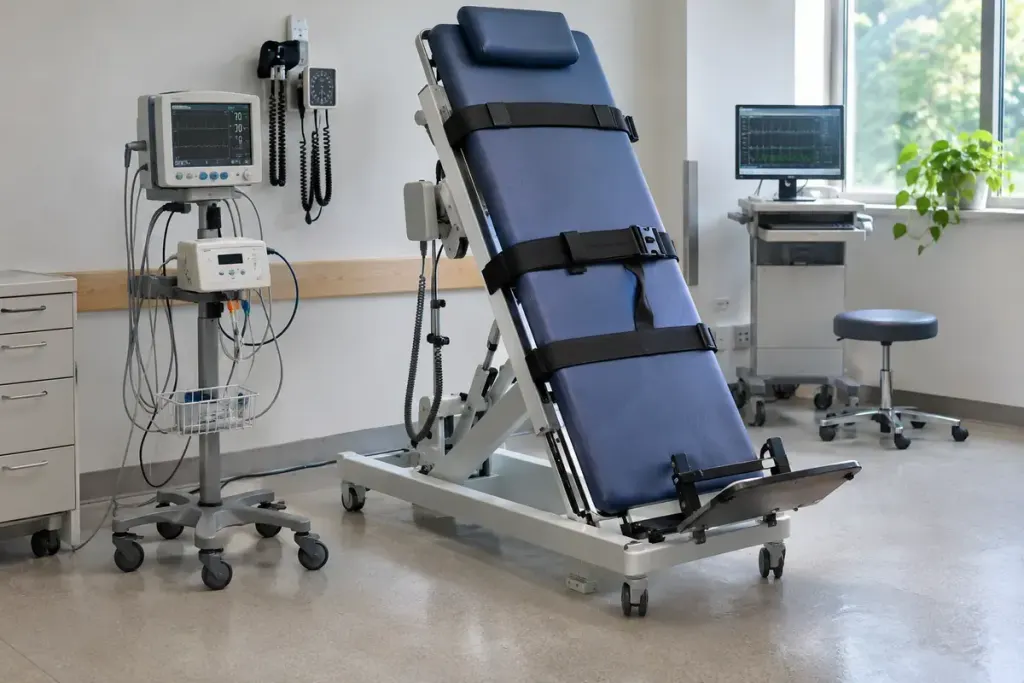
A fainting episode can be difficult to describe after it has passed. A tilt-table test gives a clinical team a controlled way to observe how your circulation responds to a change in position, while comparing any symptoms with the episodes you have experienced outside the clinic.
According to Guy’s and St Thomas’ patient guidance, the test involves monitoring while a table moves you from lying down towards an upright position. Supports help keep you secure. The purpose is not to test your determination to stay conscious or your general level of fitness.
Take your own history into the room
Before the appointment, write a short description of one or two typical episodes. Include what you were doing, whether there was a warning, how long recovery seemed to take, and what a witness noticed. Distinguish what you remember from what somebody else reported. Bring the medication list and other information requested in the appointment letter.
The clinical team may ask whether symptoms during testing resemble your usual problem. “This feels like the dizziness before my last episode” can be useful information; a simple yes or no to feeling unwell may leave out an important difference.
Let the clinic set the preparation
Protocols are not identical. Chelsea and Westminster’s tilt-testing leaflet illustrates why patients should follow their own service’s instructions about eating, drinking, medicines and the visit itself. Do not borrow another hospital’s fasting times or stop a prescribed medicine on your own.
Contact the testing service if the instructions conflict with your usual care, are unclear, or do not address a relevant condition. Also ask whether you need someone to accompany you, what transport arrangements are appropriate afterwards and how results will reach you.
A useful question before leaving is: “What does this result explain, and what remains uncertain?” One test is interpreted alongside the history, examination and any other investigations. A result that does not reproduce your symptoms does not make the original episode imaginary.
This is preparation information, not an assessment of a particular faint. Do not try to reproduce fainting at home. New or concerning episodes, especially with chest pain, injury or difficulty recovering, need prompt medical assessment rather than waiting for an educational article to identify the cause.