
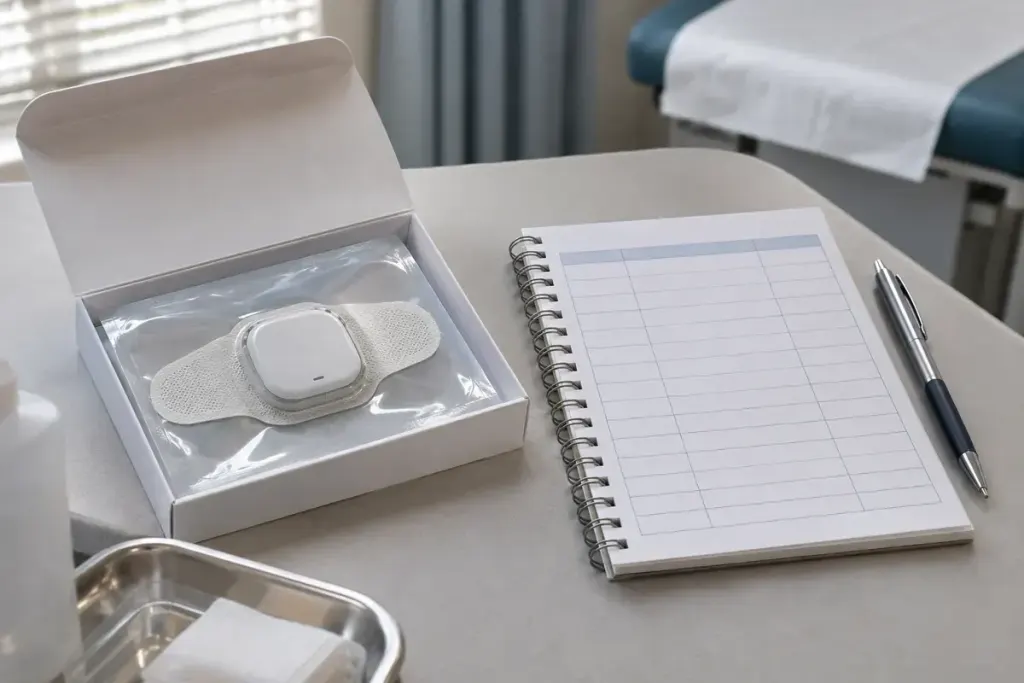
A small ECG patch can record heart activity while you go about daily life. It may be prescribed to investigate symptoms that do not occur during a brief appointment. Wearing one does not mean that someone is necessarily watching the recording live.
The exact device matters. In iRhythm’s patient guidance for its Zio monitor, patients are told how the monitor records and how to mark symptoms. Other devices and services can have different recording, transmission and response arrangements.
Before leaving the clinic
Ask for the device name and written instructions. Confirm how long to wear it, what to do if it loosens or causes irritation, which activities are restricted, and how it must be returned. Water exposure instructions should come from the actual model’s guidance rather than advice about another person’s monitor.
Also ask who will review the results and how you will hear from them. A return envelope or collection appointment is part of the test, not an administrative detail to leave until the last day.
Make symptom notes useful
If your monitor has a symptom button, follow the instructions for using it. A button press marks a moment; a written note can add context. The Zio XT clinical reference manual, for example, pairs symptom marking with a patient log.
An illustrative note might record the time, what you felt and what you were doing. Describe “fluttering while sitting after lunch” rather than deciding the rhythm’s medical name yourself. Do not change medicines or deliberately provoke symptoms unless your clinician has instructed you to follow a particular protocol.
A monitor is not an emergency response service. For severe chest pain, serious breathing difficulty, collapse or another medical emergency, seek urgent help rather than waiting for the patch to generate an alert.
The most useful preparation is understanding both halves of the test: what the device records and what you need to record or do alongside it.