
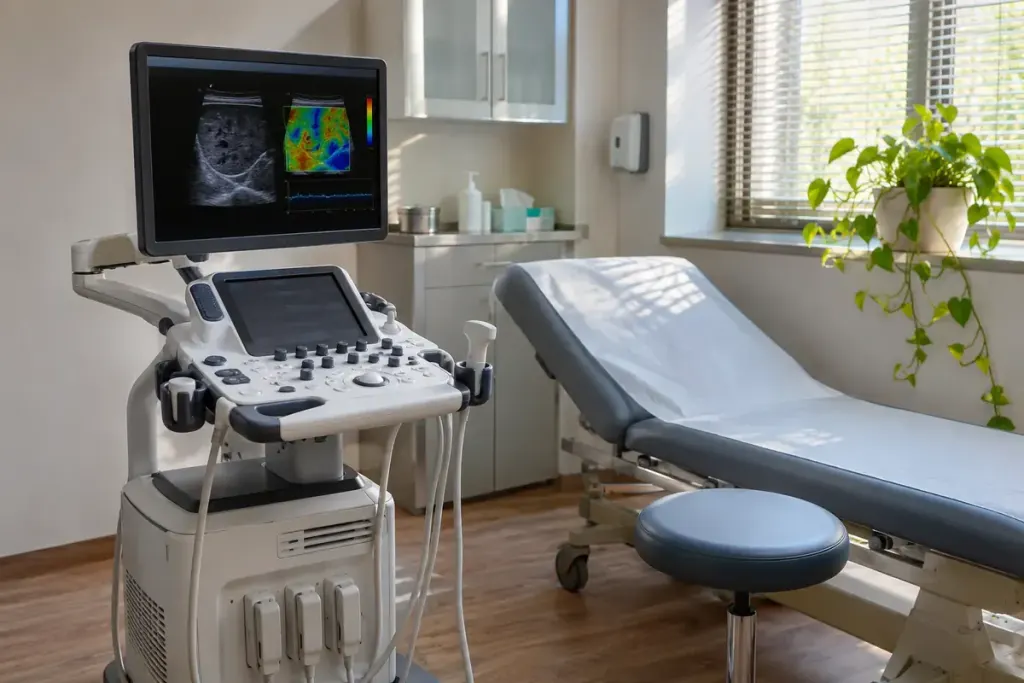
A referral for transient elastography can sound more alarming than the appointment itself. The test estimates liver stiffness using waves measured through a probe on the skin. FibroScan is a device name commonly associated with this method.
What does it measure?
NICE’s assessment of FibroScan describes its use in assessing liver fibrosis and cirrhosis through stiffness measurement. The result supports a clinical assessment; it should not be treated as a complete diagnosis or a personal prognosis on its own.
Your clinician can explain how the measurement fits with the reason for referral, blood tests, medical history and any other findings. Avoid comparing a number from your report with an unexplained threshold from someone else’s online discussion.
What happens at the appointment?
North Tees and Hartlepool NHS Foundation Trust’s patient information describes lying on your back with the right arm raised while a probe is placed against the right side of the lower chest or abdomen. Its preparation instructions include a period without food before the scan. Follow the instructions from your own service, because arrangements can differ.
If you have diabetes, difficulty fasting or questions about medicines, contact the clinic beforehand rather than changing treatment yourself. Clothing that allows access to the right upper abdomen can make the visit simpler.
What should you ask afterwards?
Bring three practical questions: Was a usable measurement obtained? Who will interpret it alongside the other information? When and how will you receive the next plan?
For example, “Will the referring doctor contact me, or should I book a review?” resolves a follow-up task that the number alone cannot answer. Keep a copy of the report with the date and the clinic’s explanation.
A test can be quick while its interpretation still needs context. Leaving with a clear route to the result is more useful than trying to decide, in the waiting room, what one isolated measurement means for your health.