
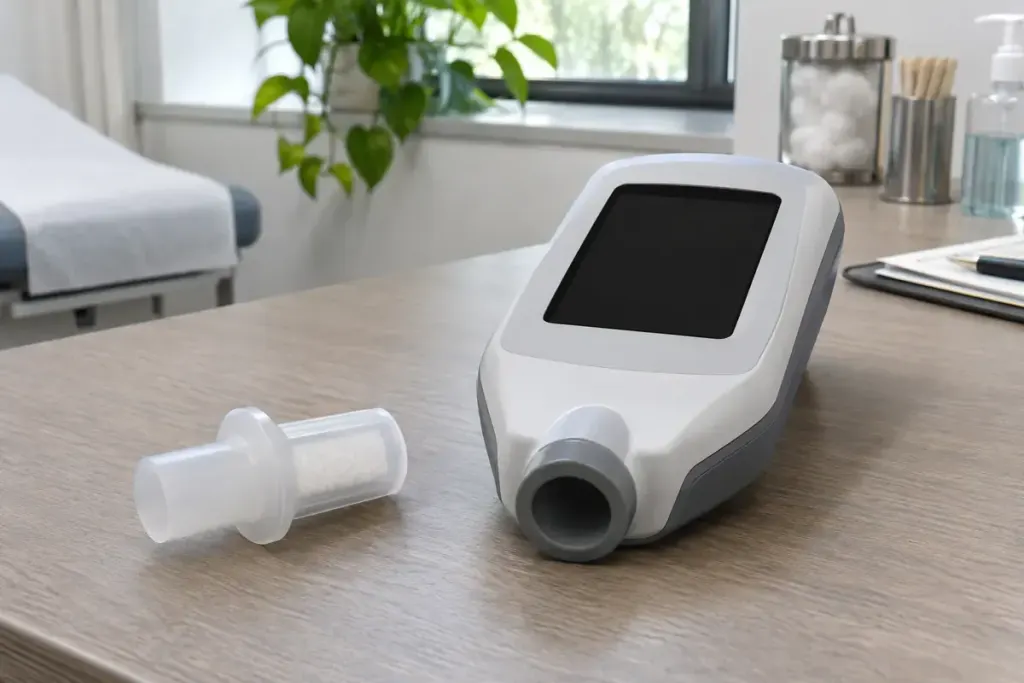
If an asthma appointment includes a FeNO test, you may be asked to breathe steadily into a small device. The test is looking at nitric oxide in your exhaled breath, which can provide information about a type of airway inflammation.
It answers a different question from a test focused on how quickly air moves out of your lungs. A clinician may use several pieces of evidence together: symptoms, history, examination and breathing-test results.
What the appointment is trying to establish
The NHS England FeNO patient leaflet describes a gentle breath out through a filtered mouthpiece and explains its role alongside other diagnostic tests. The staff guide the breathing manoeuvre and decide whether the reading is technically acceptable.
A number on the screen is not a complete diagnosis or an instruction to change an inhaler. Interpretation depends on the clinical context. Ask what the result contributes to the assessment and what remains uncertain after it.
Prepare without changing treatment yourself
Follow the testing service’s instructions about food, drinks, smoking and exercise beforehand, and tell the clinician what medicines you have taken. If instructions are unclear, contact the service. Do not stop prescribed treatment on the assumption that doing so will make the result more “accurate.”
Bring a short symptom history: when symptoms occur, what seems to trigger them, and how they affect sleep or activity. Recording an observation such as “I wake coughing twice a week” is more useful than trying to predict which test result you should obtain.
Leave with the next step understood
Useful questions include: “How does this fit with my other tests?”, “Does anything need repeating?” and “What is the plan if my symptoms change?” Write the answers in the same place as your existing care plan so a new number does not become detached from the advice around it.
A scheduled test is not a substitute for urgent assessment when breathing becomes severely difficult. Follow your asthma action plan and seek emergency help for severe or rapidly worsening symptoms. FeNO is most helpful as part of ongoing clinical care, not as a score to interpret alone at home.