
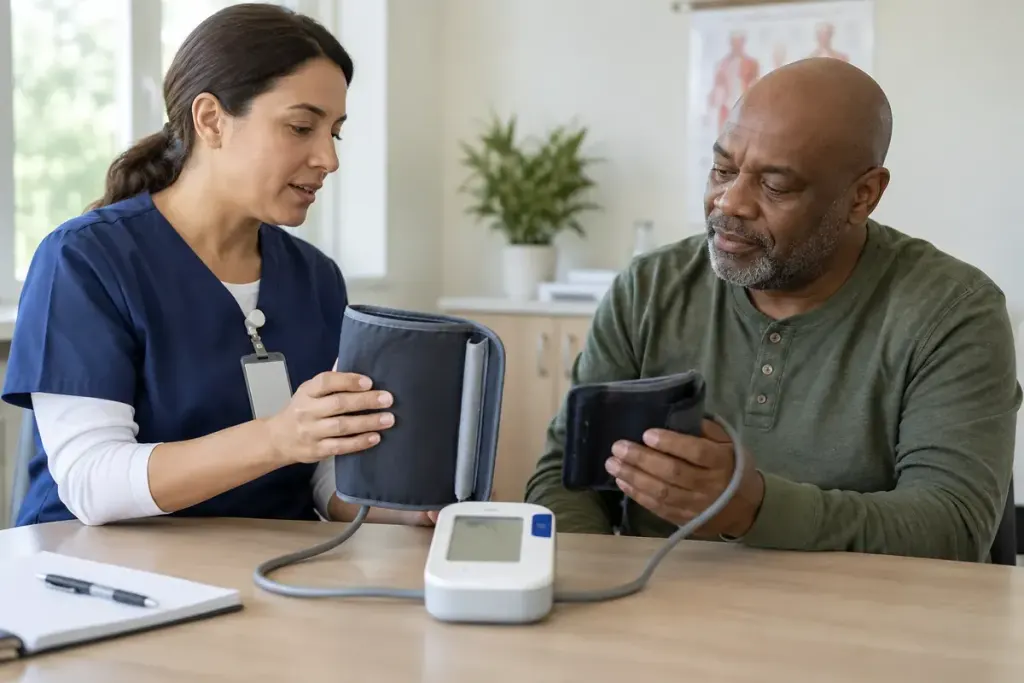
A home blood-pressure monitor can display a precise-looking number even when the cuff does not fit properly. The display’s decimal-free certainty does not establish that the measurement conditions were right. Cuff selection belongs in the setup, before interpreting a series of readings.
The American Heart Association’s home-monitoring guidance recommends a validated upper-arm device and an appropriate cuff size. It also advises having a healthcare professional check the monitor and technique.
Match the cuff range to the arm
Follow the device instructions for measuring the arm and checking the cuff’s stated range. Do not assume the supplied cuff fits every adult in a household. A larger-looking cuff borrowed from another monitor is not automatically compatible with your device.
The association’s discussion of cuff-size research explains why selecting a suitable size matters to measurement accuracy. It is not simply a matter of comfort or whether the fastening can close.
Bring the equipment to the conversation
Take the monitor, cuff, and instructions to a suitable appointment and ask for a demonstration. Show how you normally position yourself and apply the cuff. That lets the professional identify a practical problem that a list of numbers alone might not reveal.
Keep a record of the model and cuff used, particularly if more than one person or device is involved. Follow the measurement schedule and preparation instructions agreed with your clinician. Do not change medication because of one home result or use the monitor to diagnose yourself.
Ask in advance what readings or symptoms should prompt a call and what requires urgent help. Severe symptoms such as chest pain or difficulty breathing require urgent assessment, regardless of whether a home measurement seems reassuring. A suitable cuff improves the measurement process; it does not replace clinical interpretation or an emergency response.