
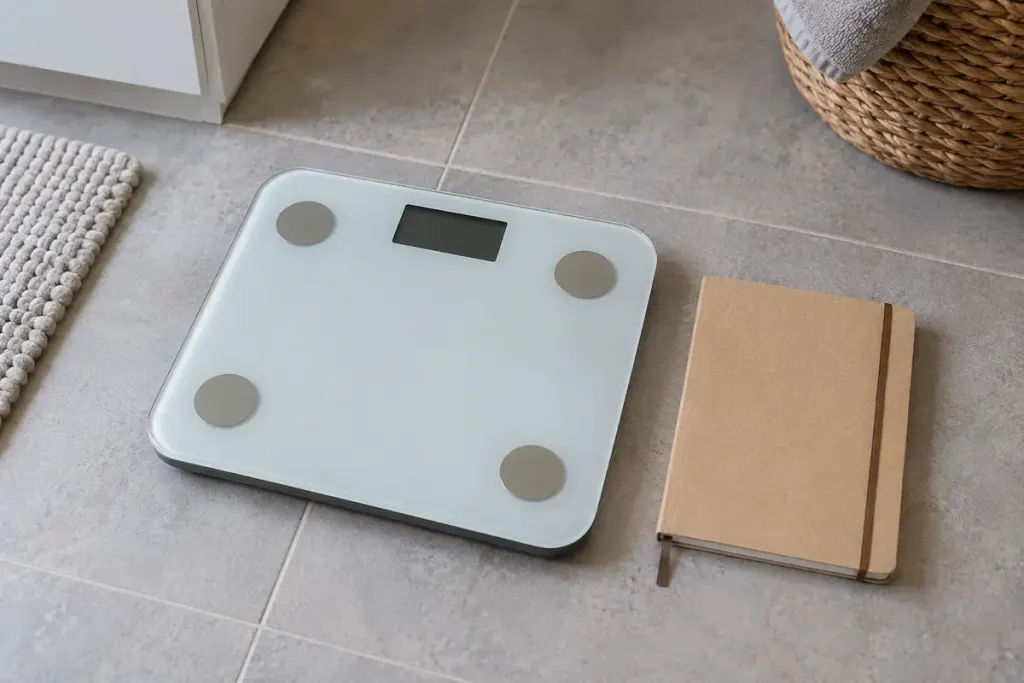
A reading taken after dinner on one set of scales is not directly comparable with a morning reading on another. If the number changes, the difference may tell you less than you think about your longer-term progress.
Whether weighing is useful, and how often to do it, should fit your care plan and circumstances. This is a guide to making an agreed record clearer, not a reason for everyone to weigh more often.
Make the conditions repeatable
NHS England’s recording guidance recommends using the same scales in the same place, on a firm level surface, and keeping the timing and clothing conditions consistent. Follow any individual instructions from your clinician where they differ.
Record the date, unit and relevant measurement conditions. Do not mix kilograms and pounds in an unlabelled column. If you change scales, mark the change rather than treating the new device as an invisible continuation of the old one.
Bring the pattern, not only the most pleasing number
For an invented example, a person may have three readings taken under their agreed routine and a fourth taken elsewhere after a meal. Label the fourth reading honestly. Deleting it to make the chart prettier or treating it as directly comparable both hide useful context.
Ask the clinician which changes matter, over what period, and what other information belongs alongside the measurements. Weight alone does not describe strength, symptoms, nutrition or the full effect of a treatment programme.
Do not change medication, restrict fluids or make drastic food changes to influence a weigh-in. If weighing causes distress or encourages compulsive checking, discuss a different monitoring approach with a qualified professional. A record should support care, not become a daily test of personal worth.
Know when a chart is not enough
Unexpected changes accompanied by symptoms deserve medical advice rather than a guess based on a graph. Follow any monitoring thresholds supplied for your particular condition.
A useful appointment note might be: “These readings used the same setup; this one did not; here is the question I want help interpreting.” It gives the clinician a clearer starting point than a single number remembered from an uncertain moment.