
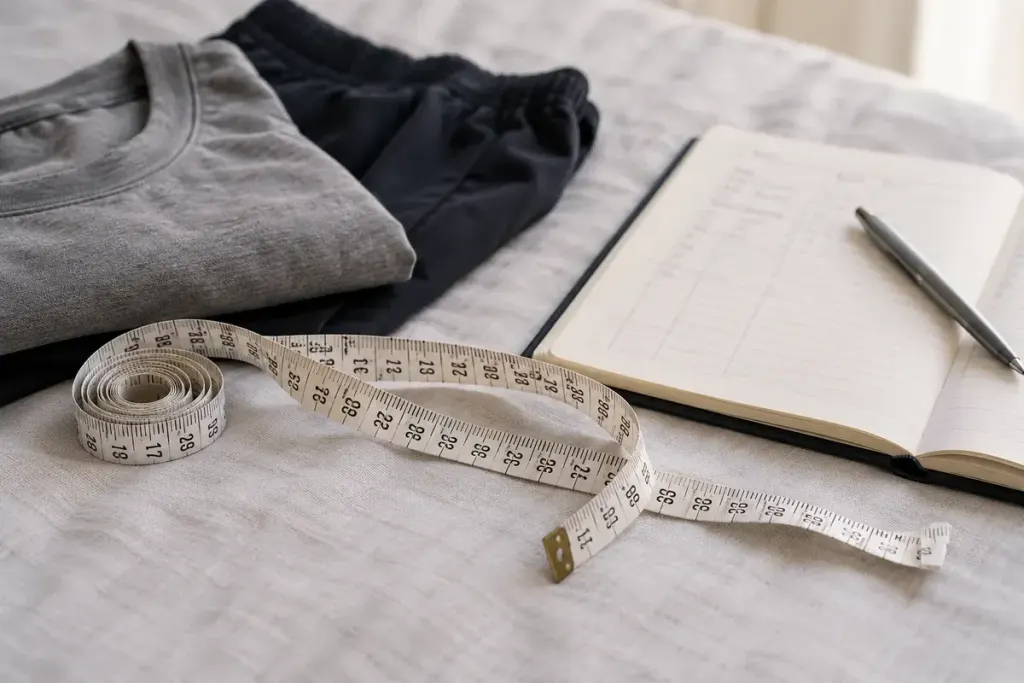
A tape measure can produce a different waist reading simply because it has moved. If a clinician has asked you to record this measurement, consistency matters more than finding the smallest number.
Ask which method they want you to use and how often a measurement is useful. Different purposes can involve different landmarks. Clothing measurements and a clinical waist measurement should not be assumed to mean the same thing.
Use the agreed landmark
The East Lancashire Hospitals NHS Trust guidance describes measuring halfway between the bottom of the ribs and the top of the hips, then reading after breathing out naturally. The anatomical reference is more useful than choosing a trouser waistband that may sit differently from day to day.
Use a flexible measuring tape and check that it is level rather than twisted or sloping. It should rest against the body without being pulled into the skin. Avoid deliberately holding the stomach in to change the result.
If you cannot position or read the tape comfortably, ask a healthcare professional to demonstrate or help. There is no benefit in repeatedly struggling with an uncertain technique and treating the resulting numbers as precise.
Record the method as well as the number
Write the date, unit and method alongside the reading. Do not mix centimetres and inches in the same unlabelled column. If the tape slipped or clothing interfered, note that rather than interpreting the difference immediately as a change in your body.
A waist measurement is one piece of information. It does not diagnose a condition or explain an unexpected change by itself. Discuss its meaning with the clinician who requested it, especially where illness, pregnancy or another circumstance affects the usefulness of the measure.
You do not need to measure repeatedly throughout the day. If monitoring causes distress or becomes difficult to stop, tell your healthcare professional and agree on a different approach. The purpose of a record is to support care, not to turn an isolated number into a judgement about you.