
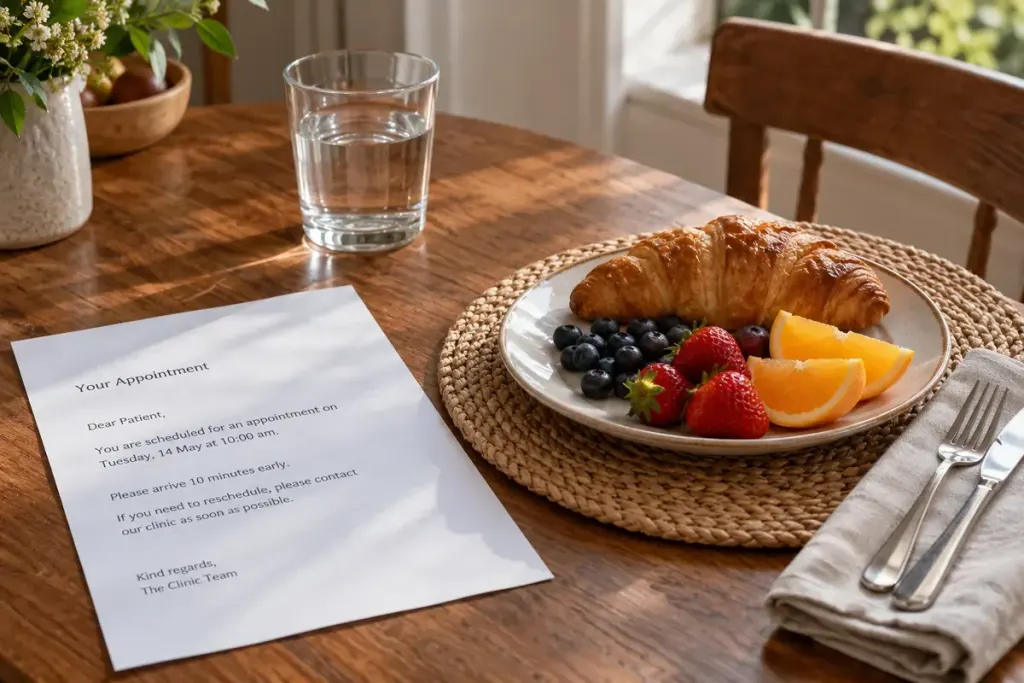
A morning blood-test appointment does not automatically mean you should skip breakfast. Preparation depends on the tests ordered and the instructions from the clinician or laboratory.
MedlinePlus’s fasting guidance explains that some tests require fasting and others do not. It also advises asking about medicines rather than stopping them independently. The right question is therefore specific: “For the tests on my request, do I need to fast, and exactly how should I prepare?”
Get the instructions before the evening before
Ask how long any fast should last, what drinks are permitted and whether exercise, smoking or other activities affect preparation. Follow the laboratory’s answer instead of combining several internet instructions into a stricter routine of your own.
Tell the team if you have diabetes, are pregnant, take medicines with food or have another reason fasting may be difficult. They can give suitable instructions or arrange the appointment differently. A general guide cannot determine safe medication changes for an individual.
- Keep the test request and preparation message together.
- Write down the appointment time and any fasting start time provided.
- Ask whom to contact if the instructions are unclear.
- Bring an up-to-date medicine list when requested.
If you eat or drink something outside the instructions, tell the clinic before the sample is taken. Do not hide it or extend the fast to compensate. The staff can decide whether the test should proceed or be rescheduled.
After the sample, ask when you may eat and drink normally and how results will be communicated. If you tend to feel faint during blood collection, mention that beforehand so the team can plan appropriately.
Good preparation is accurate preparation. Fasting for longer than requested does not make you a better patient; following the actual instructions gives the care team a clearer basis for interpreting the result.