
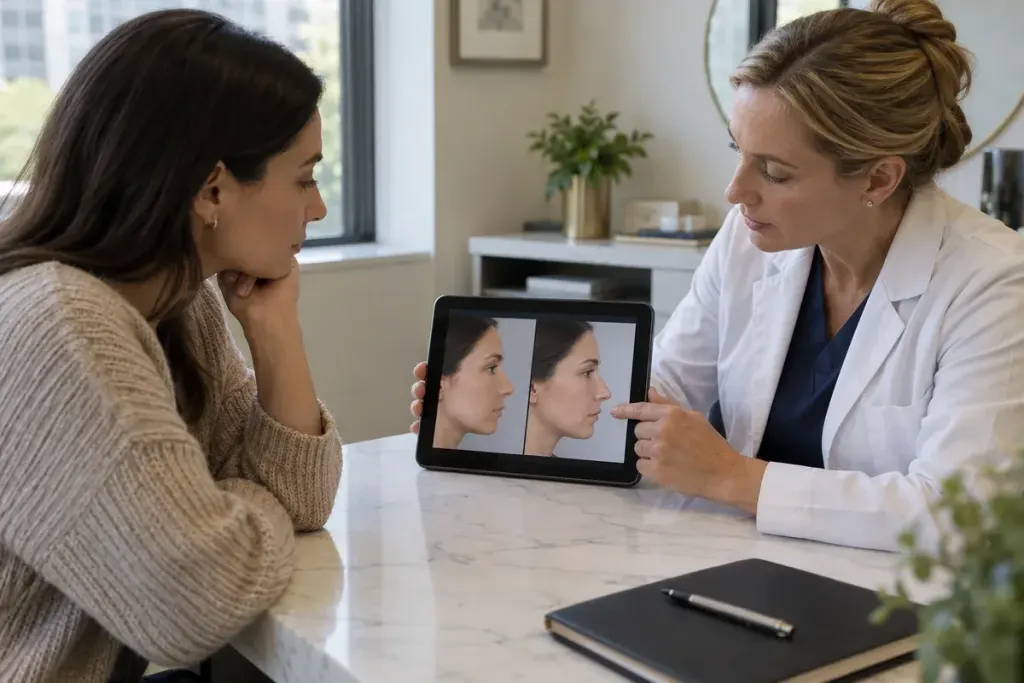
Two photographs sit side by side: one looks tired, the other brighter and smoother. The change feels obvious. Yet a photograph can show an appearance without explaining how it was produced, how long it lasted or what the person experienced along the way.
Before-and-after images can support a consultation, but they should start questions rather than settle a decision. Your own suitability, risks and expectations need an individual discussion with a qualified practitioner.
Compare the conditions of the photographs
Look at lighting, camera angle, facial expression, makeup, hair position and distance. Differences can change the impression even when the person and treatment are genuine. Ask whether the images were edited and whether they show comparable conditions.
Also ask when each image was taken. An early result may include swelling or may not represent the longer-term outcome. A single selected case does not show the range of responses among patients.
Ask what happened between the frames
Was there one procedure or several? Were other treatments, medicines or lifestyle changes involved? What recovery time and follow-up were needed? These questions help prevent an image from becoming a promise about one isolated service.
The NHS guidance on choosing a cosmetic practitioner recommends consulting the person who will perform the procedure before making a final decision. Its UK context does not replace checking the relevant credentials and requirements in your own location.
Bring the conversation back to your goal
Describe the concern in your own words rather than asking to reproduce another person’s face or body. Ask what is realistically changeable, what may remain and what alternatives include doing nothing. Request an explanation of material risks and how complications would be managed.
A useful note might contain three headings: hoped-for change, uncertainty and follow-up question. This keeps the discussion grounded when a polished gallery makes every outcome look immediate and uncomplicated.
Take the decision away from the image
Review written information in your own time. Be cautious about pressure to book before you have understood the procedure and aftercare. A discount deadline does not make a health decision clearer.
If you later agree to have your own photographs used, discuss the purpose, audience and consent arrangements separately from treatment. A good consultation respects both your decision about the procedure and your control over how your image is shared.