
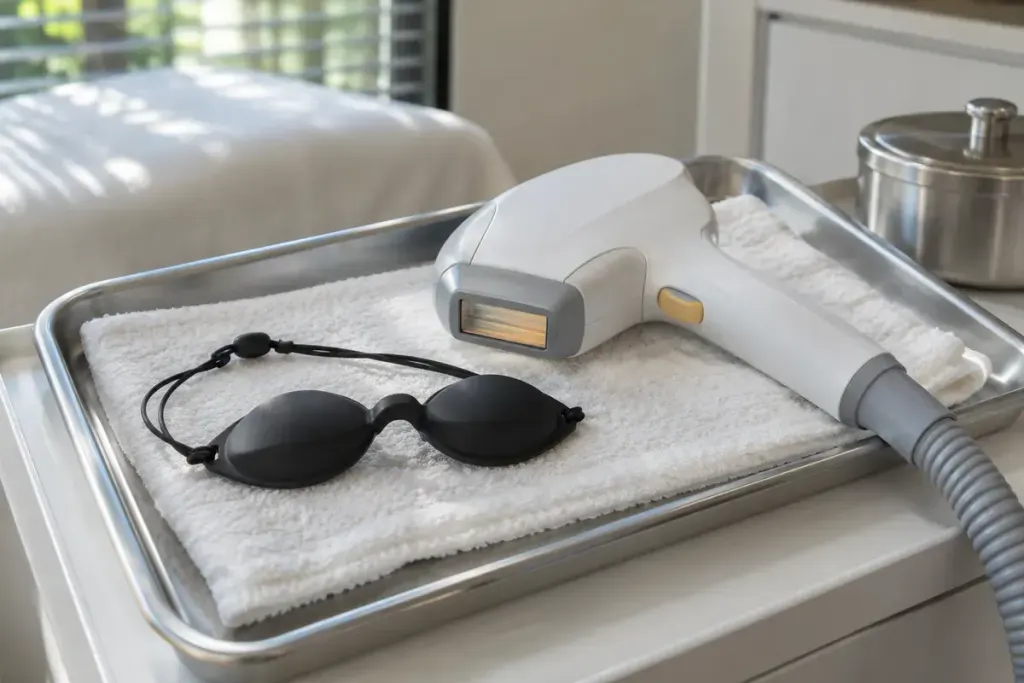
The protective eyewear at an intense pulsed light appointment is part of the treatment setup. It should not be treated as an optional accessory that can be removed because it feels awkward or because a photograph would look better without it.
ARPANSA’s consumer guidance warns that inadequately protected light-based cosmetic treatments can injure the eyes, potentially permanently. IPL uses a broad spectrum of light, so protection must be appropriate to the equipment and procedure.
Ask before treatment begins
A useful consultation question is, “What eye protection is required for this device and this treatment area, and how will you check it fits?” You do not need to select specialist equipment yourself. You do need a provider who can explain the arrangement and follow the applicable device instructions and professional requirements.
Ordinary sunglasses or simply closing the eyes should not be offered as improvised substitutes. Treatments close to the eyes require particular care and an appropriately qualified assessment. The type of protection is a clinical and equipment-specific decision, not something to copy from a social-media demonstration.
Make comfort a conversation
Before the device is used, tell the practitioner if the protection presses painfully, slips or obstructs a necessary communication method. Ask how to signal that you need a pause. A pre-agreed word or hand signal is more useful than attempting to adjust protective equipment during a flash.
If anything changes during the appointment, ask the practitioner to stop and reassess before continuing. New eye pain, visual disturbance or persistent unusual light sensitivity after treatment warrants prompt medical assessment; do not assume it is an expected cosmetic after-effect.
When comparing clinics, record how clearly each answers these practical questions alongside price and appointment length. A consultation that explains protection, suitability and what to do if something feels wrong provides information a before-and-after gallery cannot supply.