
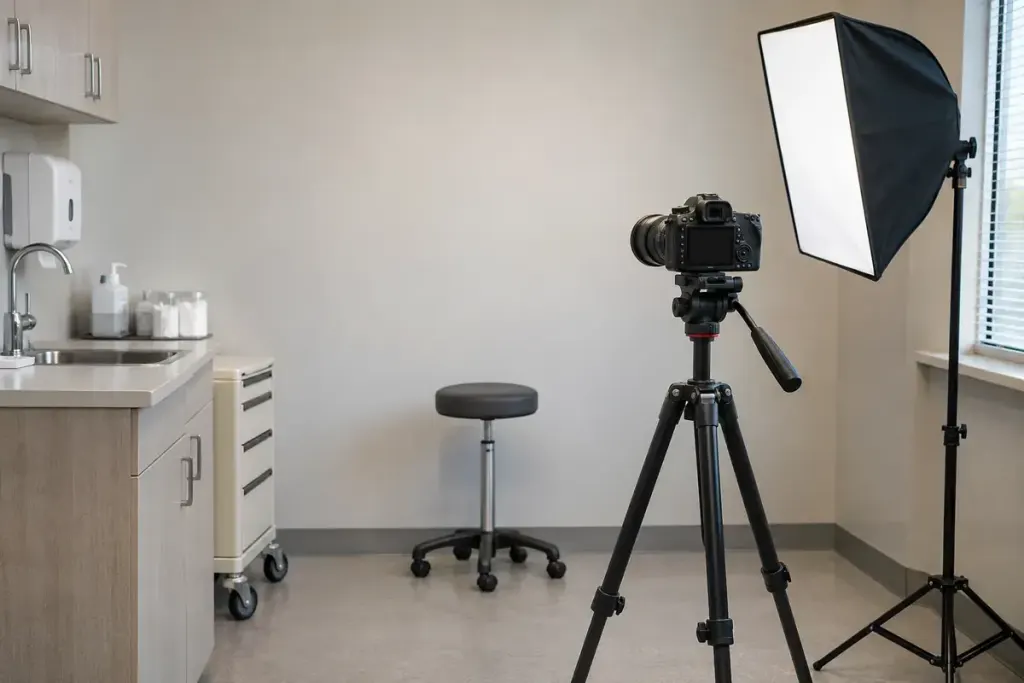
Two photographs taken a month apart can make a skin change look dramatic even when part of the difference comes from the camera. A brighter lamp, a closer angle, or a beauty filter can alter what the viewer sees.
Clinical photography aims to record a condition accurately enough to support care. It is not a competition to produce the most flattering image, and a photograph alone cannot answer every diagnostic question.
Consistency gives a comparison context
A review of clinical photodocumentation explains why positioning, lighting, equipment, and background should be consistent when images are compared over time. Changing several of those at once makes it harder to separate a real clinical change from a photographic one.
If a clinician asks you to send follow-up photographs, ask for their specific instructions. They may want an overview, a closer view, or a scale in a particular position. Do not apply filters, retouch the area, or select only the image that makes the concern look smallest. Mention when the photograph was taken and any difficulty reproducing the requested view.
For example, a mark photographed under warm bathroom lighting one day and in cool daylight another day may appear to change colour. That is a reason to discuss the images carefully, not proof that either the condition improved or the camera explains everything.
Agree on use and a secure route
Leeds Teaching Hospitals’ patient information explains that clinical recordings have consent arrangements linked to their intended use. Ask whether an image is for your care record, teaching, or publication; these are different purposes.
Use the clinic’s approved submission method rather than a public social-media account. Avoid including unrelated identifying details when they are not needed. If you are worried about a new or worsening symptom, contact the service rather than waiting for the next comparison photograph. Good images can support a conversation, but they should not delay appropriate assessment.