
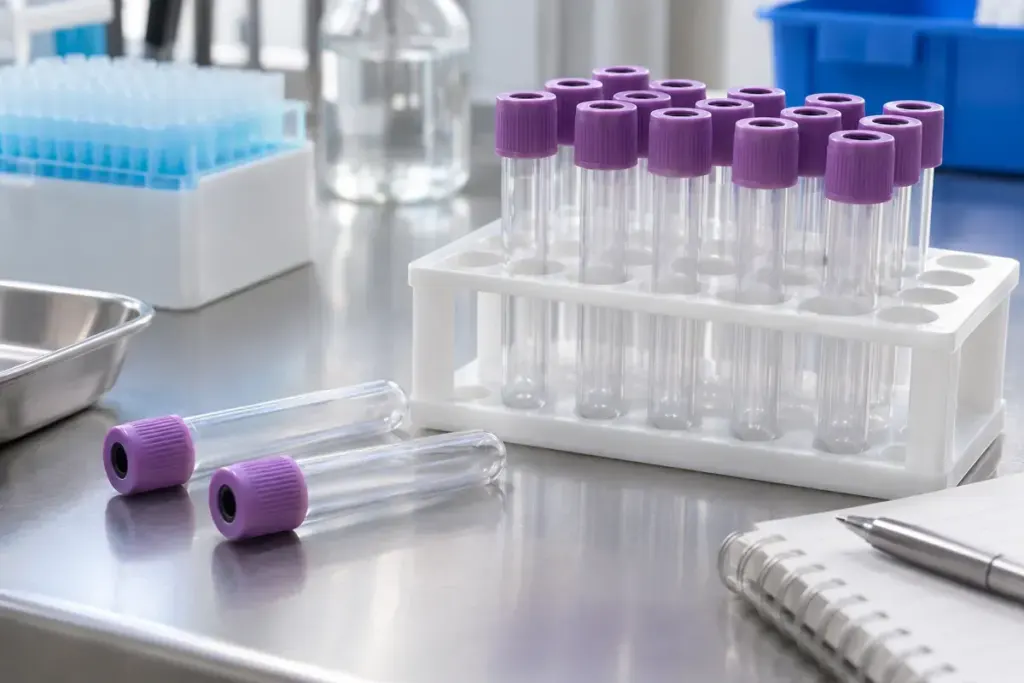
A laboratory request that says “osmolality” can look more mysterious than the test itself. The question is about concentration: how many dissolved particles are present in a given mass of fluid. It is one piece of information about the body’s fluid balance, rather than a score for how healthy your drinking habits are.
MedlinePlus explains the different osmolality tests, including blood and urine measurements. Clinicians may compare the two because a concentration in the bloodstream and a concentration in urine answer related but different questions. The reason for ordering the test, other laboratory results and your symptoms all affect its interpretation.
Check which sample the request needs
Before the appointment, read the collection instructions rather than assuming that every test uses a blood draw. If urine is required, ask whether you should provide a sample at the clinic or use a collection container supplied in advance. If two samples are requested, ask whether their timing matters. Bringing a home sample in an unsuitable container can create a problem that has nothing to do with the result.
Preparation is also specific to the order. Ask whether to change food or drink beforehand and what to do about your usual medicines. Do not deliberately drink extra water, restrict fluids or stop a prescription to make a number look better. Tell the clinician about supplements and recent changes that could help explain the circumstances of the test.
A useful conversation after the result
Instead of asking only whether the number is inside the printed range, try: “What question were we investigating, and does this result answer it?” If a blood and urine result were taken together, ask how they fit together. A flagged value does not, by itself, identify a diagnosis.
Keep the actual report and the collection date for follow-up. If symptoms are worsening, seek clinical advice rather than waiting to interpret the figures yourself; a laboratory portal cannot assess how you are feeling today.