
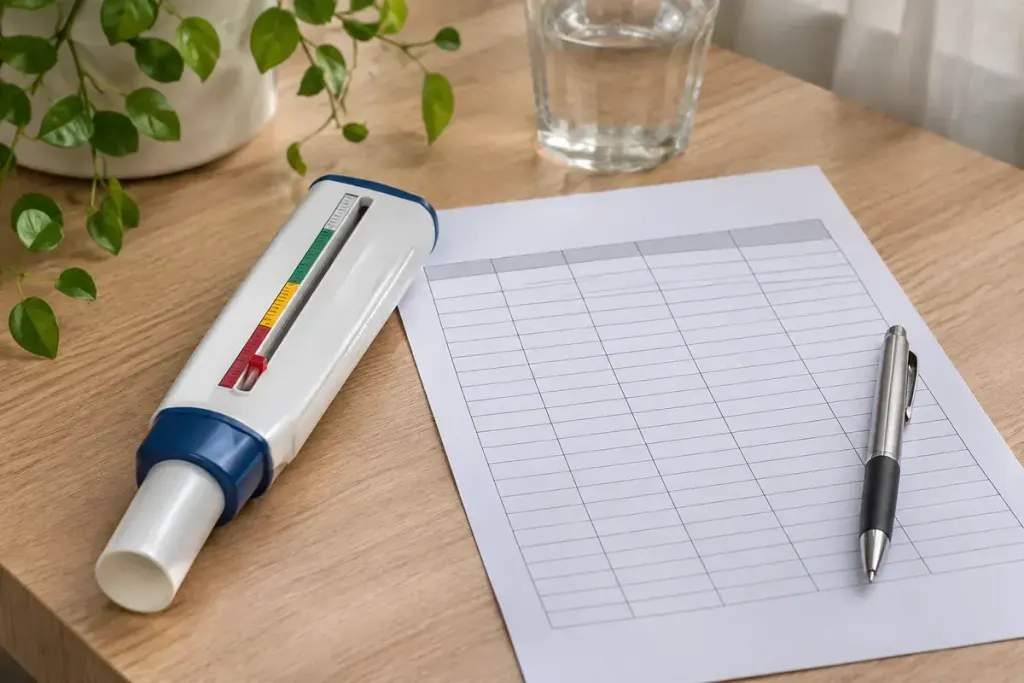
A peak-flow diary is most useful when its entries are comparable. A number taken in a hurry with a different technique may be harder for your clinician to interpret than a consistent series with a few honest notes about what changed.
Dartford and Gravesham NHS Trust advises asking a clinician or pharmacist to demonstrate the meter. Its instructions call for three attempts and recording the highest reading, with a consistent sitting or standing position. Follow the instructions for your own meter and care plan.
Agree what the diary should contain
Ask when readings should be taken, how they relate to your inhaler use and how long to continue monitoring. Note the date and time alongside the result. If you were asked to record symptoms or medicine use, include them rather than leaving the number to tell the whole story.
Suppose an entry is lower than the surrounding readings. A note that the technique was interrupted is different from a note that you also felt more breathless. Do not quietly replace an inconvenient result with a better-looking number. Ask how to document an uncertain attempt.
Bring the meter and diary to the appointment so the team can review both the record and the technique. A familiar routine can drift, and a short demonstration may resolve a problem that the written figures alone cannot explain.
Use your own action plan
NHS Wales explains that peak-flow values vary between people and that changes from your usual pattern matter. Do not borrow a friend’s target or use a general internet table to change prescribed treatment.
Ask your clinician what readings or symptoms should trigger contact, what to do outside normal clinic hours and where the written asthma plan is kept. Severe breathing difficulty needs urgent medical help; do not delay care to finish a diary entry or repeat measurements.
The diary supports a clinical conversation. Its strength comes from a repeatable method, a relevant personal baseline and clear instructions about what to do when the pattern changes.