
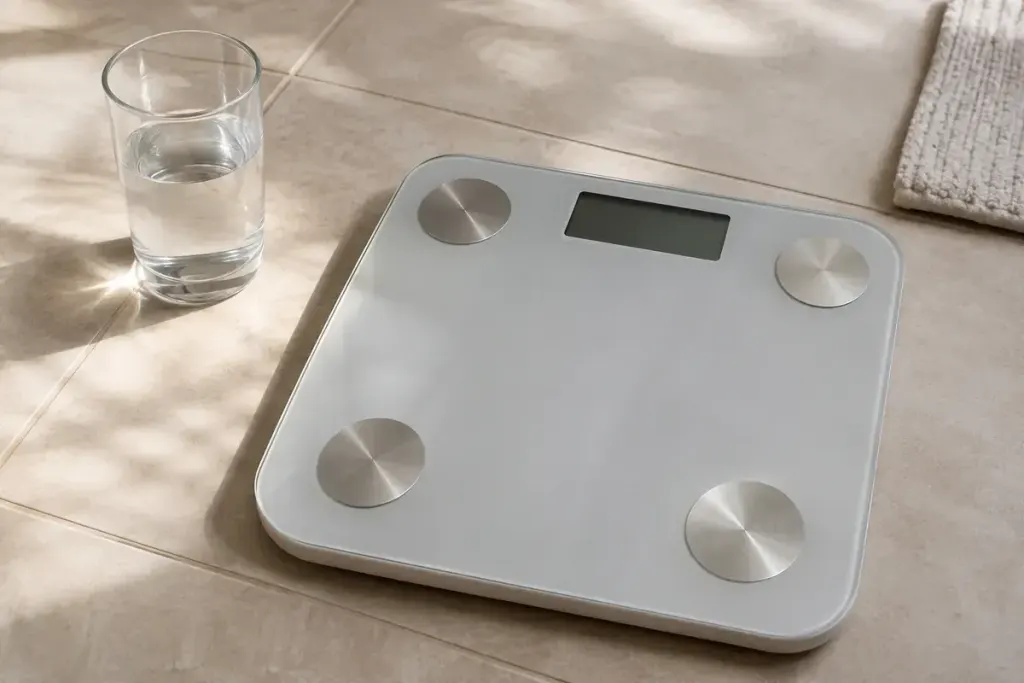
You step on a body-composition scale twice on different days and the body-fat percentage changes more than you expected. The display looks precise, but it is still an estimate produced by a method with assumptions. It is not a direct photograph of fat tissue.
Many home devices use bioelectrical impedance analysis, or BIA. They measure an electrical property of the body and combine it with information such as weight and the user profile to estimate composition.
Water affects the measurement path
Manufacturer Tanita explains that normal hydration changes affect BIA readings. It also describes why drinking water immediately before measurement does not produce a simple, predictable correction to the displayed percentage.
The useful conclusion is not to manipulate drinking so that the scale gives a preferred result. It is to recognise that recent food, drink, exercise and measurement conditions can complicate a comparison.
Make the routine consistent within the device’s instructions
Use the same device, correct profile and recommended measuring conditions. Check the manual for foot contact, positioning and any restrictions. People with implanted electronic medical devices or other relevant medical circumstances should follow the manufacturer’s precautions and seek clinical advice before using an electrical body-composition function.
If you are following a clinician’s plan, ask which measurement is actually useful for that plan and how often it should be taken. More frequent readings are not automatically more informative.
A record can include context without becoming obsessive
Alongside an occasional planned reading, a brief note such as “different time of day” or “after exercise” may explain why a comparison is weak. Do not label a sudden percentage shift as a proven gain or loss of tissue.
For example, comparing a morning reading under one routine with an evening reading after a different routine changes several things at once. The display cannot tell you which part of the difference came from those conditions.
Use longer-term patterns cautiously and discuss unexpected changes with an appropriate professional, particularly when symptoms or treatment decisions are involved. A scale can contribute information, but it should not become the sole judge of health, progress or whether a meal was deserved.