
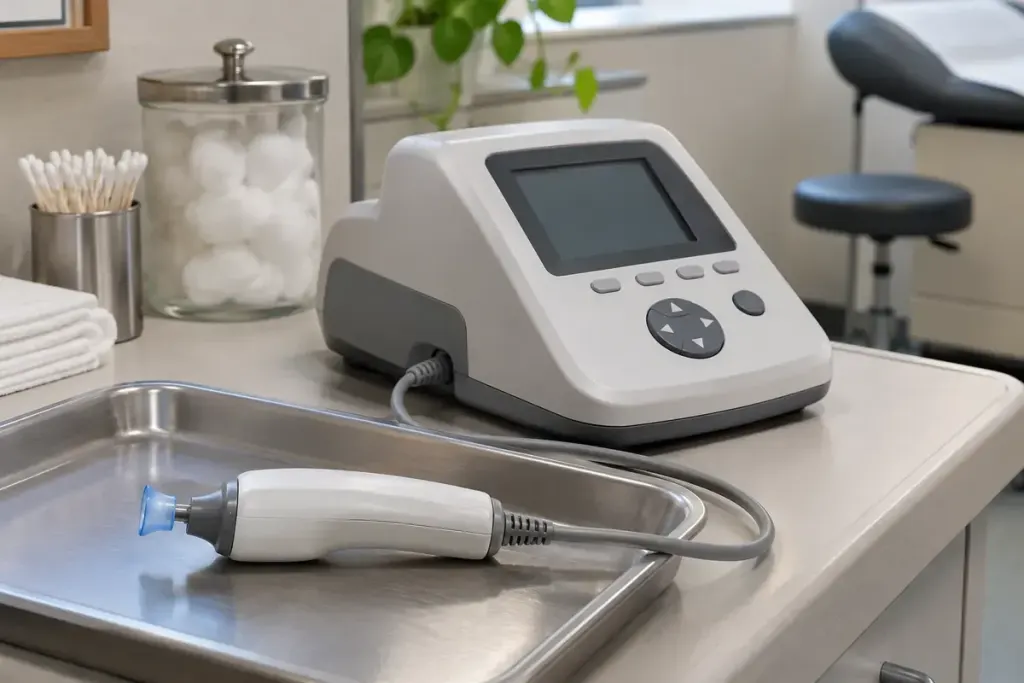
During a hearing appointment, an audiologist may place a small probe at the entrance to your ear and briefly change the air pressure. You are not necessarily being asked to listen for the faintest beep at that moment. The test may be tympanometry, which gathers information about how the eardrum and middle-ear system respond.
University College London Hospitals’ patient guide explains that tympanometry assesses eardrum movement as pressure changes. It can contribute to investigating middle-ear problems and is often used alongside pure-tone audiometry. The tests answer connected but different questions.
What to expect and what to mention
The clinician places a small soft probe at the ear-canal entrance and obtains a pressure recording. Ask them to explain the sensation beforehand if you are worried. Tell the team about pain, discharge, recent ear treatment or surgery, and any difficulty tolerating examination. They can decide what is appropriate for your situation.
You do not need to interpret the curve on the screen while the test is happening. Its shape is one part of the assessment, considered with the ear examination, symptoms and other measurements. A result should not be converted into a diagnosis from an online chart alone.
Three useful questions after the test
- What did this test show about the middle ear?
- How does it fit with the other hearing-test results?
- Is a repeat test, treatment or another assessment needed?
The NHS hearing-test overview describes several tests that may be used in an appointment. It is reasonable to ask which ones you had and why, especially if the visit involved several pieces of equipment.
For your own notes, record the explanation and next step rather than copying an unexplained label. “The audiologist wants to repeat the pressure test after the review” is more useful than a letter or graph shape without context. If hearing changes suddenly or you develop concerning symptoms, seek prompt medical advice rather than waiting for a routine appointment simply because a previous test was reassuring.