
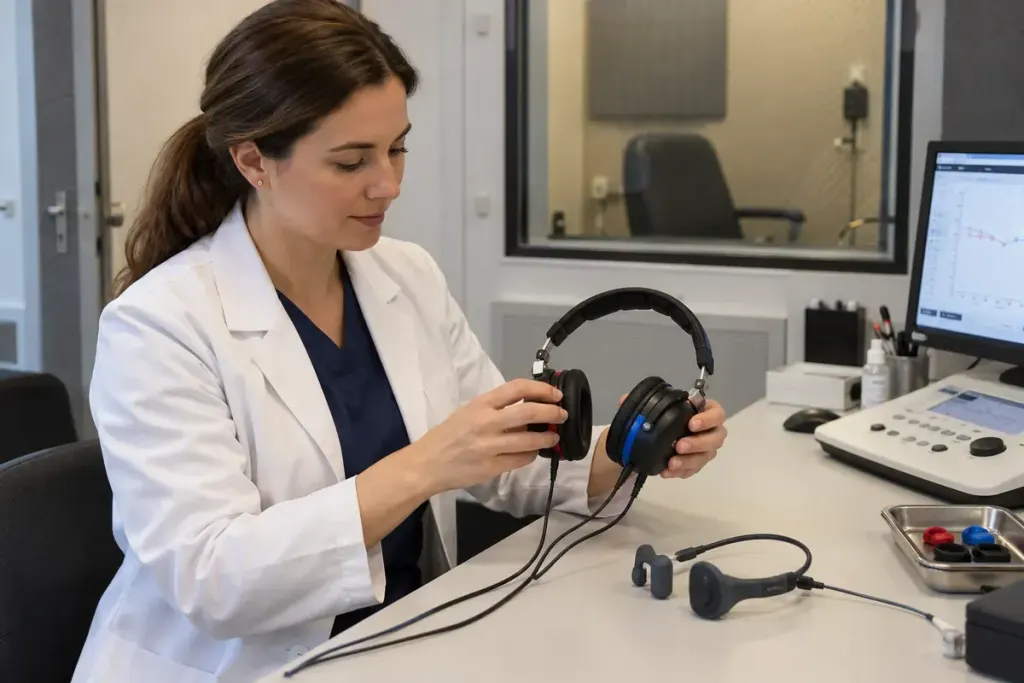
An audiogram can contain several types of marks for each ear. They are not decorative variations. Some results come from sounds delivered through earphones; others come from a small vibrator placed against the skull. Together, these measurements help an audiologist understand the hearing pathway.
The American Speech-Language-Hearing Association’s hearing-loss guidance describes air- and bone-conduction assessment. Air conduction involves the outer, middle and inner ear pathway. Bone conduction delivers vibration that bypasses the outer and middle ear.
Read the explanation before reading the symbols
The graph usually compares frequency with hearing level. Ask the clinician to identify the legend used on your own result, including which symbols represent each ear and whether masking was used. Masking introduces sound to the other ear when needed so that a response can be attributed more accurately.
A difference between air- and bone-conduction thresholds can be clinically relevant, but its meaning depends on the complete assessment. It is not a diagnosis to make from a cropped photograph or a single point on the graph. Examination, test reliability, symptoms and other measurements may all matter.
Three useful appointment questions are:
- What do the air- and bone-conduction results show together?
- Were there any limits to the test or measurements that need repeating?
- How do these findings relate to the listening problems I described?
Bring concrete examples from daily life: difficulty following speech in a busy room, uncertainty about where a sound comes from or a change noticed in one ear. Describe when the problem began and whether it has changed. These observations help connect the graph with the reason you sought care.
Ask for an explanation of the recommended next step and a copy of the result if you want one. The goal is not to memorise every symbol before leaving; it is to understand what was measured and what happens next.
If hearing changes suddenly or is accompanied by concerning new symptoms, seek prompt medical assessment rather than waiting to interpret an online chart. A routine audiogram guide cannot determine the urgency of an individual situation.