
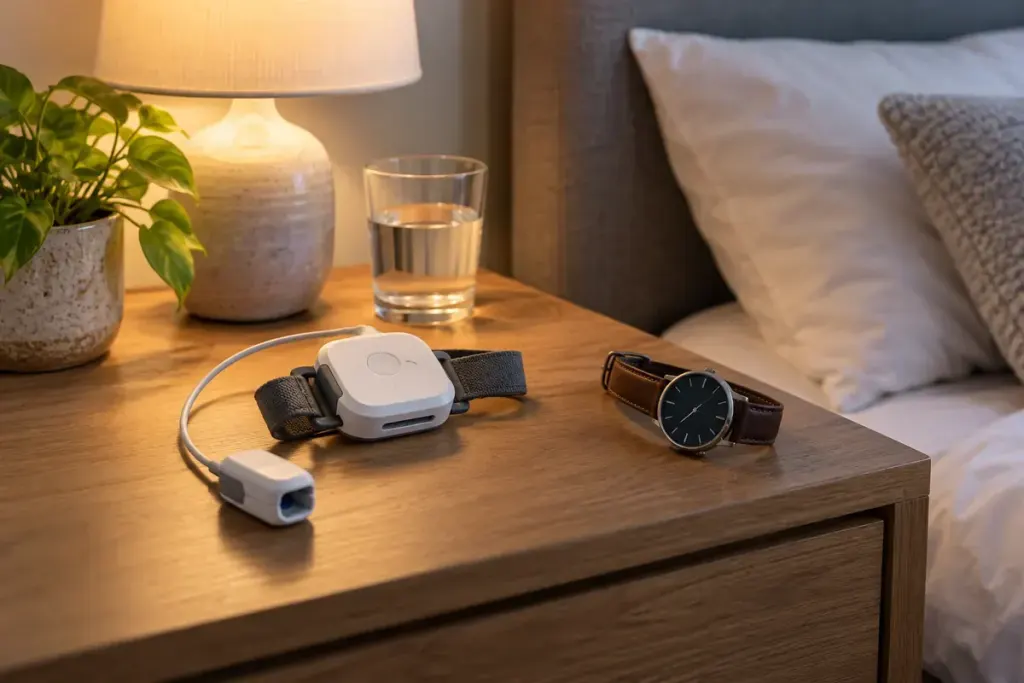
A watch says the night was restless. A sleep clinic offers an overnight test. Both involve sleep, but they are not automatically measuring the same things or answering the same clinical question.
The NHS explanation of sleep apnoea describes specialist tests using devices that monitor signals such as breathing and heartbeat during sleep. Testing can often take place at home, though some people need an overnight clinic assessment. The care team decides which investigation is appropriate.
Learn the kit before bedtime
When collecting the equipment, ask staff to show you how each part is fitted and how you can tell it is recording. Repeat the instructions back in your own words. Check what to do if a sensor comes loose, the device displays an error or you sleep for much less time than usual.
Ask about the night’s routine, prescribed medicines and any preparation specific to the test. Do not stop medication or change treatment to try to produce a “cleaner” result without clinical instructions. Keep the equipment’s written directions somewhere accessible.
Keep consumer data in its proper role
If you use a watch or app, tell the clinician what it records and what concerns prompted the appointment. Its graphs may help you describe a pattern, but do not substitute its score for the prescribed test or use an apparently normal score to dismiss persistent symptoms.
After the night, note any practical problem that might affect interpretation, such as a detached sensor. Return the kit as arranged and confirm who will explain the results. A completed recording is not the same as having received a diagnosis or treatment plan.
Seek medical advice about symptoms such as witnessed breathing pauses or marked daytime sleepiness. Avoid driving or other hazardous activity when sleepy. A good test preparation routine is fairly ordinary: understand the equipment, follow the instructions and give the clinician an accurate account of what happened during the recording.