
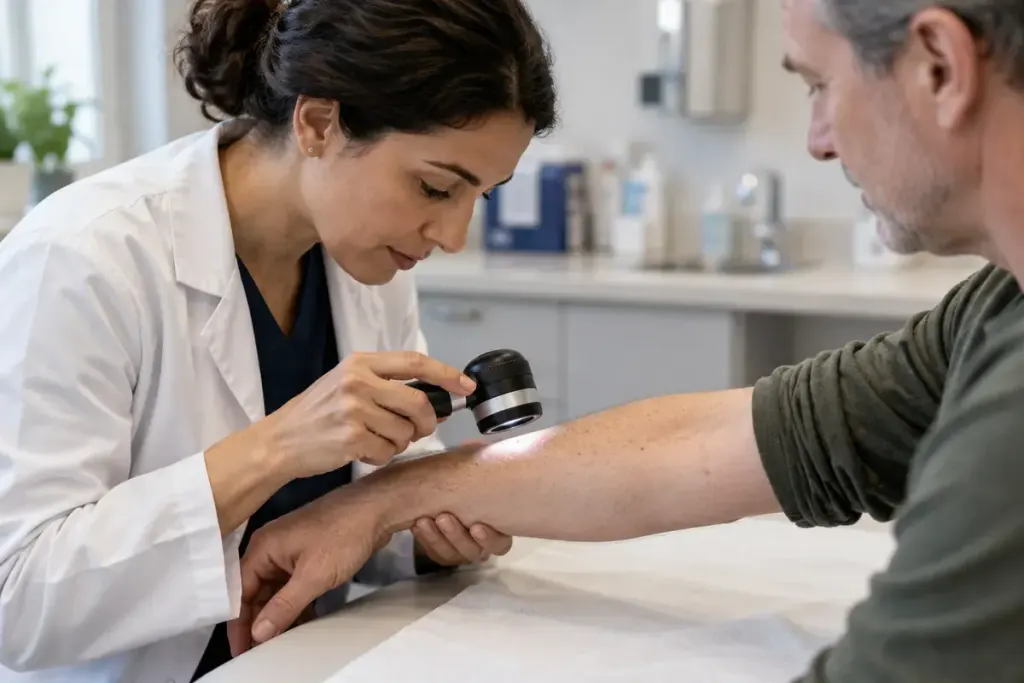
During a skin examination, a clinician may use a small illuminated instrument close to the skin. This is a dermatoscope. It helps the examiner see features that are harder to assess with the unaided eye.
DermNet’s clinician-authored explanation of dermoscopy describes examination using magnification and lighting. The instrument supports a trained assessment; owning a magnifier or comparing a photograph online does not reproduce that clinical process.
Bring the history of the change
Before the appointment, note which area concerns you, when you first noticed it and what has changed. Relevant photographs taken over time can help show a sequence, but tell the clinician when they were taken and whether lighting or image processing differs.
Describe symptoms and previous assessment or treatment. Do not assume a small-looking mark is unimportant, or that a large one can be judged from size alone.
Ask how the finding affects the plan
Useful questions include what the clinician has observed, whether more investigation is needed and what follow-up is recommended. If photographs are recorded, ask how they will be used and how you will be contacted about the next step.
A dermatoscopic examination does not mean that every finding can be resolved immediately. The clinician may recommend monitoring, another assessment or a procedure such as biopsy according to the individual situation. Ask for an explanation of the proposed action rather than interpreting the presence of the instrument as a diagnosis.
Before leaving, make sure you know whom to contact if the area changes or if an expected appointment or result does not arrive. Keep any written plan with your health records.
The most helpful role for this knowledge is preparation: you can understand the purpose of the tool and contribute a clear history. Decisions about a particular skin lesion still require an appropriate clinical examination.